Hidden Water Leak Detection in Monroe Township, NJ
A slow drip concealed within an insulated interior wall or second-floor subfloor can rot structural wood framing and feed mold colonies long before water stains break through. Our precision water leak detection Monroe Township NJ services isolate the hidden origin of water intrusions without destructive wall demolition across Williamstown, Cecil, and the Victory Lakes area.
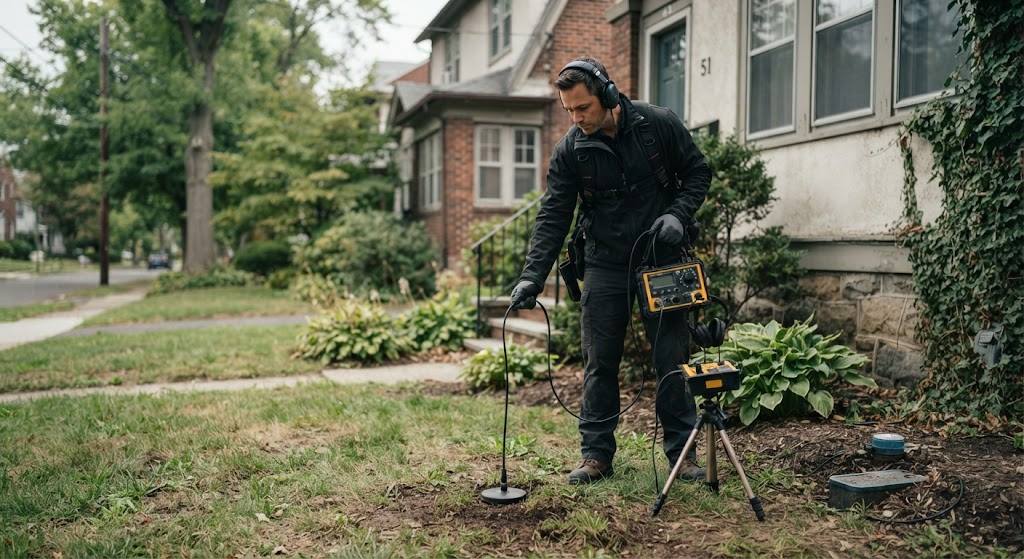
Identifying Concealed Water Leaks Before Structural Damage Multiplies
In typical Monroe Township residences—from two-story colonial layouts along Fries Mill Road to ranch style houses near the Downer area—plumbing supply risers and drainage stacks travel through uninsulated interior partition walls and ceiling cavities. When a pressurized copper fitting, PEX crimp ring, or drain flange fails, water travels horizontally along horizontal joists before dropping downward.
Consequently, where you observe a water stain on your first-floor ceiling or along baseboard trim is rarely where the actual pipe breach is located. Guessing with a drywall saw frequently results in multiple unnecessary holes, ruined paint, and frustrated contractors.
Key Indications of an Interior Hidden Water Leak
- Steadily Rising Water Utility Bills: Modest increases month-over-month without changes in irrigation or household occupancy.
- Water Meter Creep: The low-flow indicator dial on your meter rotates when all valves, ice makers, and fixtures are turned off.
- Soft Drywall or Bubbling Paint: Peeling latex paint, chalky sheetrock, or damp discoloration appearing on ceilings or behind appliances.
- Persistent Musty or Earthy Odors: Stagnant moisture trapped inside enclosed wall studs breeding mildew and airborne mold spores.
- Unexplained Floor Warping: Buckling engineered hardwood, cupped solid oak planks, or loose bathroom vinyl tiles.
Non-Invasive Diagnostic Methods: Finding the Source Before Opening Walls
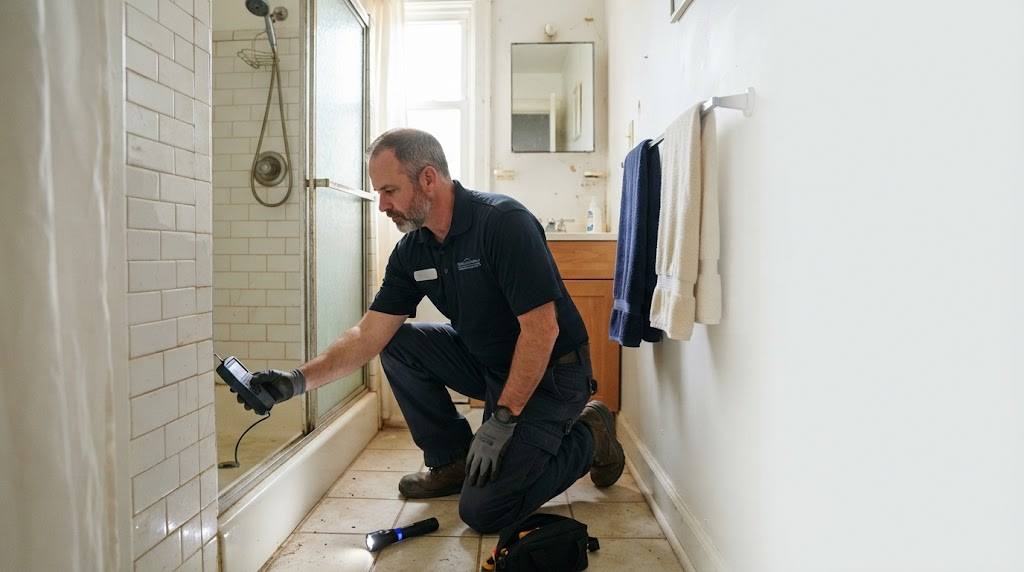
Our non-destructive diagnostic approach utilizes five calibrated scientific technologies to verify, isolate, and pinpoint the leak path:
Thermal Infrared Imaging
High-sensitivity FLIR thermal imagers capture slight temperature differentials caused by evaporative cooling or warm water escaping from pipes, revealing hidden moisture blooms through sheetrock and plaster.
Acoustic Resonance Listening
Electronic listening microphones and contact probes amplify the acoustic vibration of pressurized water escaping tiny fissures, filtering out background household hums.
Non-Invasive Moisture Mapping
Radio-frequency and electromagnetic pinless moisture meters measure relative capacitance up to one inch deep behind walls and floors without leaving needle holes or surface marks.
Hydrostatic Pressure Testing
We isolate hot and cold domestic plumbing loops independently using calibrated test gauges to confirm whether the pressure drop originates on the supply lines or drain lines.
Inert Tracer Gas Testing
For micro-leaks that evade acoustic listening, we charge the line with safe, non-toxic tracer gas (nitrogen-hydrogen mix) and detect escaping gas particles using digital sniffer sensors.
Safety Notice: Our diagnostic tracer gas methods utilize non-toxic, non-flammable inert mixes specifically for water supply lines. If you ever smell rotten-egg fuel gas odors in your home, evacuate immediately and call your utility company or 911.